Architectural stainless steel can deliver an impressive finished surface, but small specification mistakes can become expensive once fabrication or installation begins. A sheet that looks correct in a sample may still be unsuitable if the grade, thickness, finish, dimensions, or application requirements have not been clearly defined.
For architects, interior designers, contractors, and fabricators, understanding common mistakes can make stainless steel procurement much smoother.
1: Choosing the Finish Before Understanding the Application
A designer may select a mirror or coloured finish because it looks attractive in a sample.
However, the final surface may behave differently in a high-touch area, under strong lighting, or in an exterior environment.
Start with the application, then select the finish.
2: Specifying Only the Colour
A request such as 'gold stainless steel' is incomplete.
The specification should clarify the:
- Base stainless steel
- Thickness
- PVD colour
- Surface finish
- Dimensions
- Application
- Fabrication requirements
Two sheets with the same colour description can have very different visual appearances depending on their surface preparation.
3: Ignoring Grain Direction
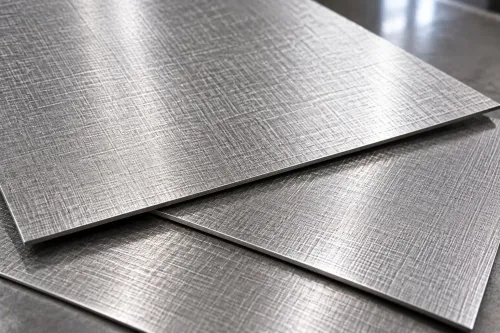
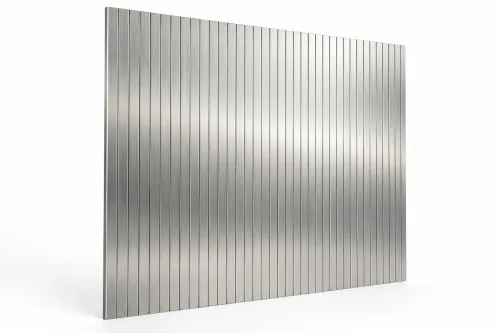
Brushed, hairline, and other directional finishes need careful handling.
If adjacent panels are installed with inconsistent orientation, the surface can appear patchy even when the sheets are individually high quality.
The panel layout should therefore be planned before cutting.
4: Ordering Without a Physical Sample
Digital images are useful for initial design discussions, but they cannot fully represent metallic reflection and colour.
A physical sample should be reviewed against:
- Lighting
- Stone
- Wood
- Glass
- Paint
- Flooring
This is particularly important for premium interiors.
5: Selecting Thickness Only on Price
Sheet thickness influences fabrication and installation.
Choosing a thinner or thicker sheet without considering the panel size and support system can create unnecessary complications.
The specification should be based on the application and fabrication method.
6: Forgetting Mumbai's Environmental Conditions
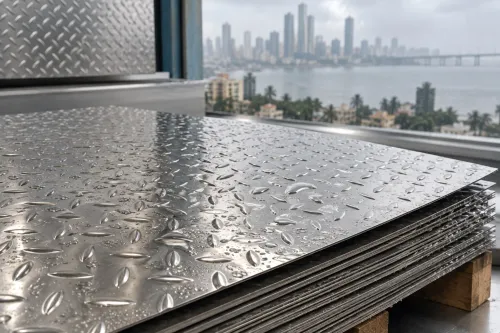
Exterior applications in Mumbai require attention to humidity, rainfall, pollution, and potential coastal exposure.
The stainless steel grade and finish should be selected with the actual installation environment in mind.
7: Treating Fabrication as an Afterthought
Cutting, bending, drilling, folding, and joining should be discussed before the material is ordered.
The fabricator should understand the selected surface finish and the required final appearance.
8: Focusing Only on Initial Price
A low purchase price may not represent the lowest overall project cost.
Material inconsistency, wastage, rework, difficult fabrication, or replacement can quickly increase project expenses.
A better comparison considers the complete material specification and expected project requirements.
NIXON STEELIUM LLP supplies stainless steel sheets and PVD coating solutions for architectural applications where material appearance and specification need to be carefully coordinated.
A Simple Pre-Order Review
Before approving an architectural stainless steel sheet, confirm:
- Application
- Grade
- Thickness
- Surface finish
- Colour, if applicable
- Sheet dimensions
- Grain direction
- Fabrication method
- Installation approach
- Environmental exposure
Good architectural results usually begin long before the sheet reaches the site. Clear specifications allow designers, procurement teams, fabricators, and contractors to work toward the same finished appearance.
Keywords