“Lenin” is commonly a trade spelling of “linen,” but the name alone does not identify the relief depth, repeat size, direction or substrate construction. By checking the pattern, geometry, certificates, finish and sample quality in a defined order, you can compare quotations and approve a batch for work in Mumbai, Navi Mumbai, Thane or Bhiwandi without relying on a catalogue image.
Key takeaways
- Confirm “lenin” means mechanically embossed linen pattern, not etched texture.
- Specify grade, thickness, sheet size and fabrication allowance in writing.
- Match the approved sample against relief, colour, finish and flatness.
- Compare quotations by delivered specification, inspection terms and usable yield.
What linen, or “lenin,” embossing should look like
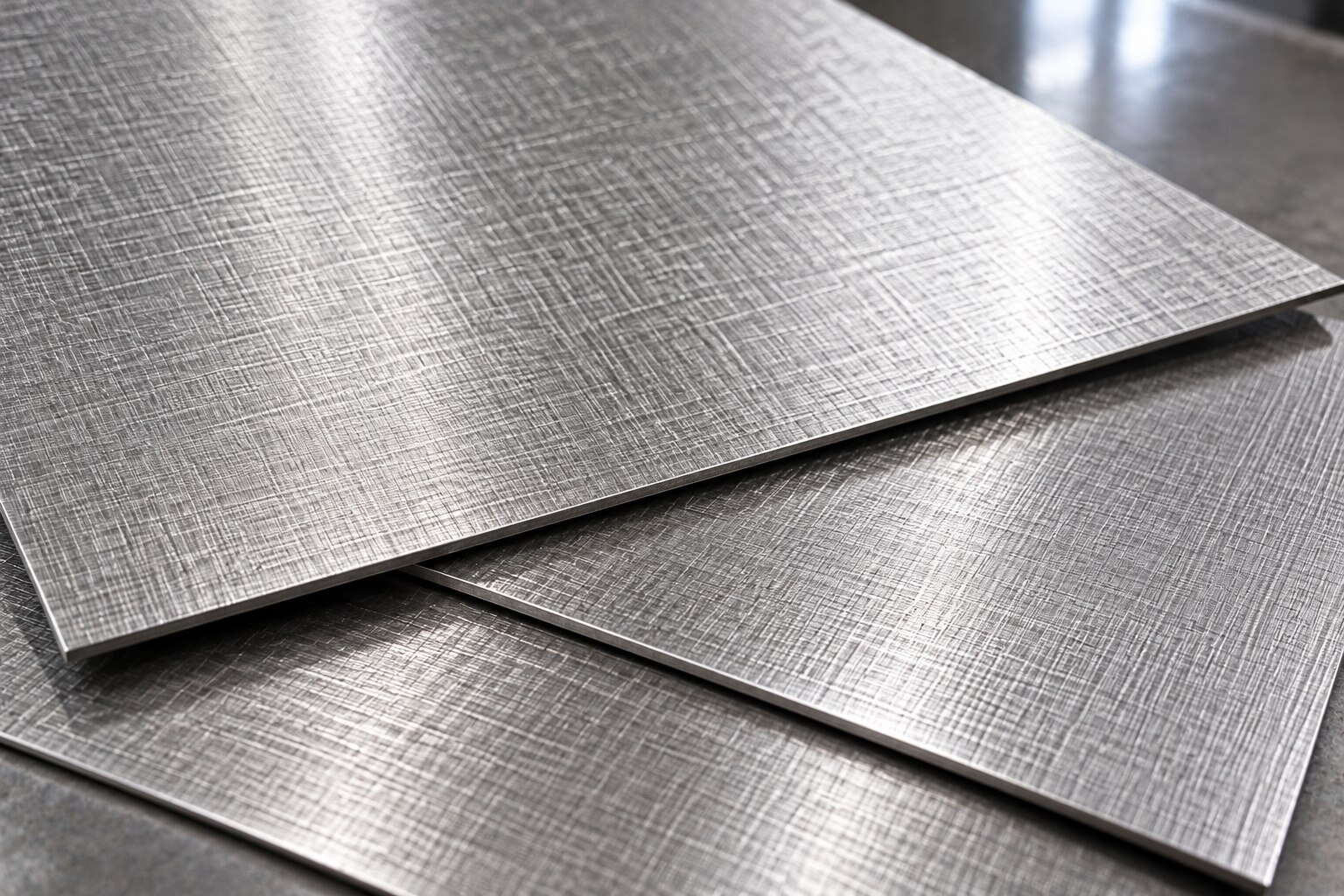
“Lenin” is commonly used in Indian architectural-metal listings as the search spelling for the linen pattern. The surface is mechanically embossed with a repeating relief texture, not chemically etched, bead-blasted or laser-textured.
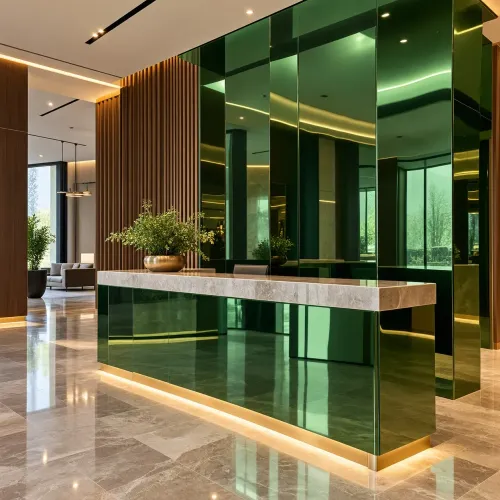
Define the repeat size, relief direction and acceptable alignment before ordering: angled showroom spotlights and daylight expose highlights and shadows, while site lighting can reveal waviness, uneven relief and joins between misaligned panels.
Write this exact description on the purchase order: “linen (also quoted as lenin) embossed stainless steel.” Then request:
- A physical sample or pattern drawing showing repeat size and embossing depth.
- The required pattern direction and allowable mismatch between adjacent sheets.
- A larger sample with two sheets joined edge-to-edge under the project lighting.
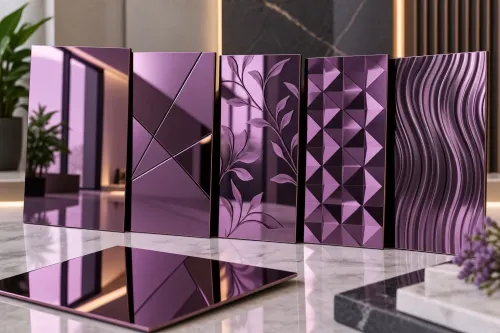
| Surface | Visual and practical effect |
|---|---|
| Plain 304 | Smooth, quiet appearance; marks and dents show clearly. |
| Hairline or brushed | Fine linear grain; less reflective, but direction remains prominent. |
| Mirror | Maximum reflection; scratches, fingerprints, waviness and joins stand out. |
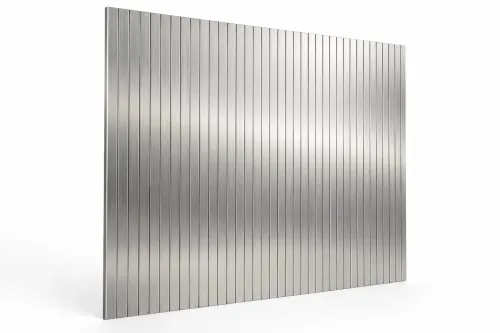
| Vertical-line | Strong one-way ribbed appearance, unlike linen’s repeating relief. |
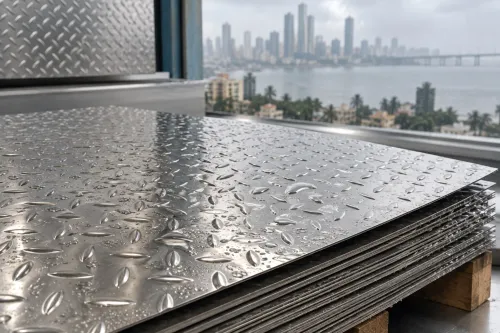
| Diamond or checks | Bold geometric pattern with more obvious intersections. |
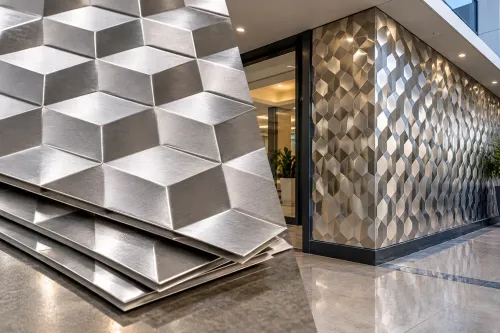
| 3D-cube | Deep architectural geometry and stronger shadow changes. |
| Linen or lenin | Textured highlights conceal minor handling marks better than mirror, but dents, scratches and panel-to-panel mismatch remain visible. |
How to specify thickness, dimensions and fabrication allowance
Specify thickness as base-metal thickness, not just “1.0 mm” or “1.2 mm”: ask whether the figure is measured before embossing or over the raised relief. Embossing changes projection, stiffness, folding behaviour and usable face area, so do not treat the sheet as geometrically identical to flat stainless steel.
| Use | Geometry decision |
|---|---|
| Wall cladding, lift interiors, columns | Confirm stiffness, backing-frame spacing, returns and projection from the substrate |
| Ceilings and furniture panels | Check dead load, visible deflection, perimeter support and concealed stiffeners |
| Doors and counters | Allow for folds, edge returns, cut-outs, hinges, hardware and impact resistance |
The relief can obstruct tight folds, distort cut-outs and increase the finished projection. Give the fabricator finished dimensions, bend lines, return depths, hole locations and backing-frame clearances; verify a trial fold before bulk cutting.
Ask the supplier to confirm:
- Actual sheet length and width, usable face size and corner margins
- Base thickness, overall embossed thickness and embossing depth
- Pattern repeat, direction and whether adjacent sheets can align
- Flatness tolerance, edge condition and cutting tolerance
- Custom-cutting availability and minimum remnant size
Measure a sample with a micrometer on the base area and a depth gauge across the relief. Record both readings. Calculate usable coverage and cutting waste from the nesting plan before comparing per-sheet prices; a cheaper sheet with unusable margins can cost more installed.
How to verify grade, substrate and coloured finishes
“SS sheet” does not prove grade 304. Require the quotation to state ASTM A240/A240M for the stainless sheet and ASTM A480/A480M for general flat-rolled requirements, where applicable, alongside grade and thickness.
1. Request a mill test certificate (MTC) identifying grade 304, heat number, chemical composition, and mechanical properties such as tensile strength, yield strength, and elongation.
2. Match the certificate’s heat number to the bundle tag, packaging label, or sheet marking. If the number is missing or differs, stop the lot until the supplier explains the discrepancy and supplies traceable records.
3. Select grade from exposure, not colour. 304 suits many dry interior feature walls; ask whether 316 is better for chloride-laden coastal exteriors, canopies, or humid service areas in Mumbai. Its molybdenum content improves resistance to chloride-induced pitting.
Confirm whether the sheet is stainless throughout or a laminated, backed, painted, or PVD-coated construction. A backing can affect cutting, folding, fire performance, and corrosion at damaged edges.
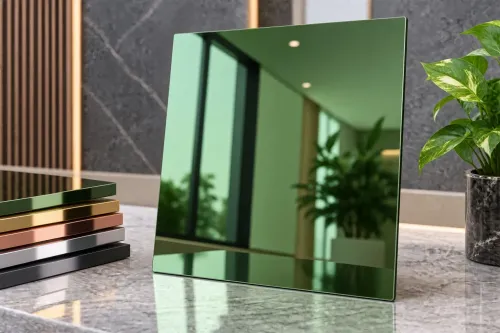
PVD colour is a surface coating, not a stainless grade. Write each item separately in the order:
- Substrate grade and base thickness
- Mirror, brushed, hairline, or other finish
- PVD colour and coating specification
- Protective film type and removal timing
- Coating test report or warranty documents
A gold or black mirror sheet still needs the same grade certificate and heat traceability as an uncoloured sheet. During approval, compare colour and reflectivity under the lighting used at the Mumbai site.
How to inspect a sample before accepting a Mumbai batch
1. Request a large sample with two sheets joined edge-to-edge. Under the actual showroom or site lighting angle, check relief consistency, repeat alignment, pattern direction, dents, waviness, scratches, pinholes, edge damage and colour variation. Record the allowable pattern mismatch in writing.
2. Before releasing the bulk order, approve the sample against a production lot. Require one production lot for visible adjacent panels; warehouse stock from mixed lots can create obvious repeat or shade changes across a continuous wall.
3. Define face inspection after protective-film removal, not only through the film. Film can hide scratches, trapped dust, shade changes and adhesive residue. Inspect the exposed face after fabrication and again at delivery or installation handover, and state who accepts damage revealed during removal.
4. Cut and fold from the reverse wherever possible. Use clean, stainless-dedicated tools, prevent carbon-steel contamination, and remove heat tint after welding, grinding or drilling. Complete fabrication before PVD coating unless the coating supplier approves another process; local rework can destroy the decorative finish.
5. For façades and humid areas, inspect drainage, crevice-free details, compatible fasteners and access to every exposed face. Require a cleaning method that is non-abrasive and chloride-free; do not let salt or dirty water dry repeatedly on the surface. Reject panels that cannot be cleaned safely.
How to compare suppliers and quotations near Mumbai
A bare rate hides the real cost. Send a complete RFQ stating:
- “Linen (also quoted as lenin) embossed stainless steel,” grade, base thickness, finished thickness if relevant, sheet dimensions, usable area, embossing repeat and depth
- Finish, PVD colour, protective film, quantity, edge condition, delivery point and required installation date
- Stock or made-to-order status, minimum order quantity, sample availability, production lead time, lot consistency, mill-test certificate, coating report, packing, transit-damage replacement and custom cutting
Ask for a large sample showing two sheets joined edge-to-edge. Approve one sample for continuous elevations and record pattern direction and allowable mismatch. Warehouse stock can combine heats or PVD shades, so immediate availability does not guarantee a consistent elevation. NIXON STEELIUM LLP is one Mumbai-based supplier to include in that documented comparison, alongside others.
| Comparison point | Local warehouse stock | Locally fabricated panels |
|---|---|---|
| Availability | Faster dispatch, subject to quantity | Lead time includes fabrication |
| Main risk | Mixed heats, unmatched PVD shades and unusable margins | Cutting, folding or handling damage |
| Ask for | Lot number, sample and replacement terms | Drawings, cutting tolerance and installation responsibility |
For “lenin embossed stainless sheets buy in mumbai” and “buy lenin embossed sheets near mumbai,” distinguish stocked sheets from fabricated panels. Compare lenin pattern stainless steel sheet price only after converting every quote to equal usable coverage and adding freight, cutting waste and fabrication. A cheaper sheet can cost more per installed square metre.
Frequently asked questions
What should linen or “lenin” embossing look like?
It should show a consistent repeating relief texture formed by mechanical embossing, rather than an etched, bead-blasted or laser-textured surface.
What details should you specify when ordering lenin embossed stainless sheets?
State the stainless-steel grade, thickness, sheet dimensions, finish or colour, quantity and the allowance needed for cutting, bending and fabrication.
How can you verify the grade, substrate and coloured finish?
Request the material documentation, confirm the substrate and grade against the quotation, and compare the coloured finish with an approved physical sample.
What should you inspect before accepting a Mumbai batch?
Check the batch against the approved sample for embossing consistency, dimensions, flatness, scratches, colour variation, edge damage and packaging condition.
How should you compare lenin embossed stainless sheet suppliers near Mumbai?
Compare identical specifications, minimum quantities, lead time, transport, usable yield, inspection terms, replacement policy and the total delivered quotation.
Keywords