Mumbai’s humidity becomes a stainless-steel problem when condensation, sea salt, dust or cleaning residue remains trapped in embossed valleys, joints and panel backs. By the end, you will be able to identify the type of staining, judge whether 304 is adequate, specify moisture-safe installation details and set a cleaning routine for the location.
Key takeaways
- Use 316 stainless steel near Mumbai’s coast or chloride exposure.
- Rinse salt and chemical deposits before they concentrate during drying.
- Seal joints, drain ledges and prevent water traps behind panels.
- Separate tea staining, dirt and corrosion before choosing a remedy.
Where Mumbai humidity causes the most damage
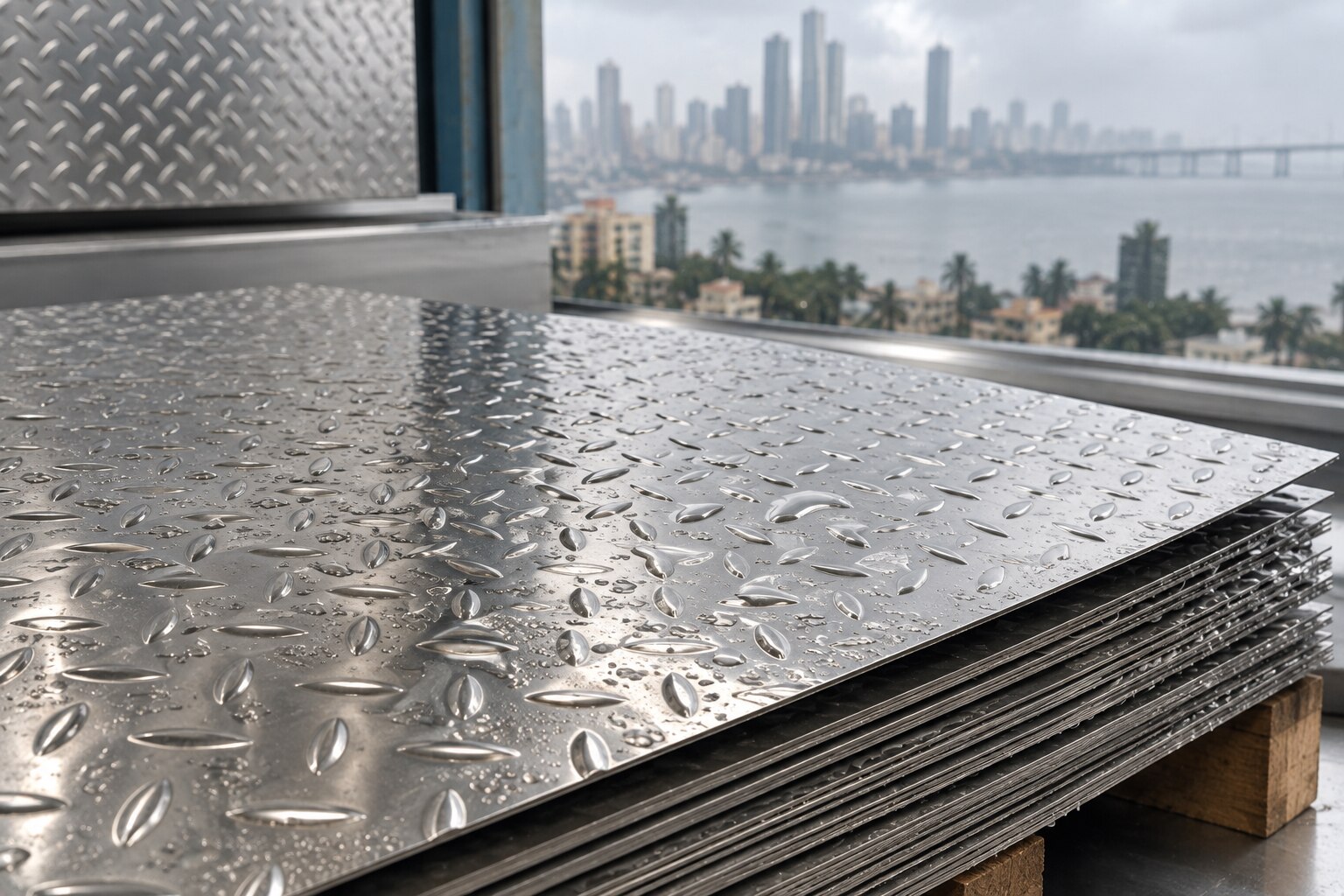
Humid air alone rarely causes the worst attack. Chloride-bearing sea salt, dust, cleaning chemicals and condensation leave deposits that hold moisture against stainless steel; repeated wetting and drying concentrates them and can disrupt the passive chromium-oxide film. This is the main source of humidity damage on embossed steel sheets.
| Location | Main exposure | Relative risk |
|---|---|---|
| Air-conditioned room | Low condensation; occasional dust | Low, if surfaces stay dry |
| Humid interior | Condensation in valleys and dust retention | Moderate |
| Bathroom | Steam, splash, wash-down water and mould on adjacent grout | High |
| Kitchen | Grease, salt, detergent residue and repeated wiping | High |
| Semi-open balcony | Monsoon spray, coastal salt and dust | High |
| Façade | Rain, salt-laden air and dirty ledges | Moderate to high |
| Fully exposed exterior wall | Frequent rain rinsing, but strong coastal exposure | Variable; drainage decides the result |
A sheltered, monsoon-facing recess can stay wetter than an exposed flat surface because wind-driven rain enters but cannot evaporate or drain freely. An unventilated cavity, wet insulation or trapped construction water can keep the panel’s back damp after its visible face looks dry.
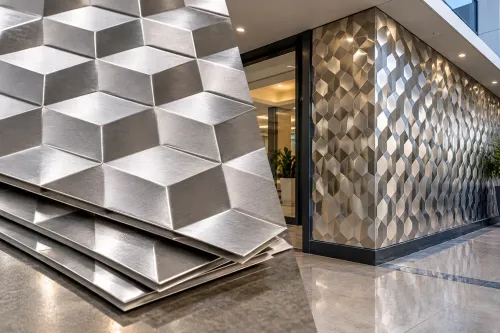
Embossed valleys, fastener zones and adjacent finishes retain dirt and mould, while wash-down water can pool in grooves. Choose embossed stainless steel sheets for humid interiors only after checking ventilation, drainage and cleaning access.
How embossing, finish and stainless grade change the risk
A flat sheet sheds rain and accepts a complete wipe; embossed geometry does neither. Valleys and sharp recesses hold water, dust and chlorides, while folded returns, laps and fastener interfaces restrict wiping access. The trapped film consumes oxygen, creating crevices where corrosion can start behind the visible face.
| Grade | Better fit | Risk boundary |
|---|---|---|
| 304 or 304L | Clean, dry interiors with controlled air and little salt | Persistent condensation, wash-down water or chloride deposits reduce its margin |
| 316 or 316L | Sea-facing exposure, salt-laden ventilation, splash zones, wash-down areas and poorly ventilated cavities | Molybdenum improves pitting and crevice resistance, but stagnant or concentrated chlorides can still attack it |
For embossed stainless steel sheets for humidity problems in Mumbai, grade selection must follow the wetting pattern, not appearance alone. A 316 sheet in a dirty, undrained recess can corrode; better alloy does not replace drainage and cleaning.
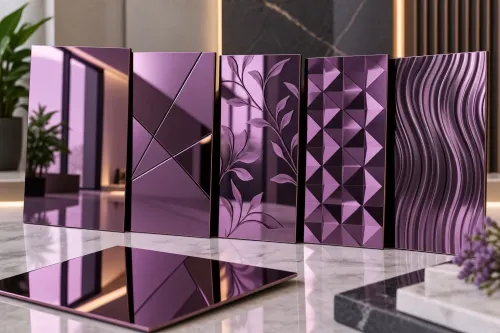
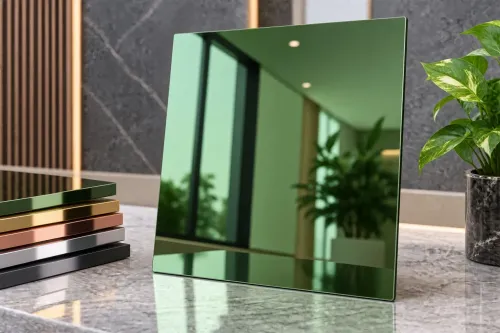
A decorative PVD finish changes colour and surface appearance, not the stainless substrate’s corrosion resistance. Scratches, drilled holes, abrasive damage, cut edges and unprotected returns expose the underlying metal, allowing corrosion at one defect to spread staining around it.
Use this checklist before approving a finish:
- Inspect valleys, recesses, laps, returns and fasteners for water retention and reachable wiping surfaces.
- Specify 316 or 316L for chloride-heavy locations after comparing the actual cavity and drainage details.
- Protect drilled holes and cut edges with suitable detailing; do not treat PVD coverage as edge protection.
- Reject designs that rely on a sealed cavity where water cannot drain or air cannot circulate.
How to tell dirt, tea staining and corrosion apart
1. Start high on stainless steel embossed panels during monsoon in Mumbai: inspect the raised points and grooves, where rainwater and chloride-bearing dust collect. Then check horizontal ledges, edges, folded returns, joints, laps, fasteners, the lower edge and the panel back. A sheltered recess or unventilated cavity can stay wet after an exposed face dries.
2. Classify the mark before cleaning it. Brown-orange tea staining is often superficial chloride-related discoloration on the surface, especially after salt deposits and repeated wetting. Pinholes, pits, roughness, edge attack or a mark that returns after cleaning indicate active corrosion or a contaminated crevice, not a cosmetic stain.
3. Look for the source around the mark. Small rust spots can be flash rust from carbon-steel grinding dust, steel wool or contaminated tools; they do not prove that the stainless grade failed.
Corrosion concentrated where stainless steel touches carbon steel, aluminium or another dissimilar metal points to galvanic action, especially when wet debris bridges the contact. Mould or dirt on adjacent paint, stone, sealant or insulation can also hold moisture against the panel.
4. Record the exact location, the area of spread, surface roughness and any visible pit depth before intervening. Photograph the mark beside a scale, note whether it follows a groove, edge, fastener or joint, and use only the approved gentle cleaning method for that finish.
If cleaning removes the mark completely, record that result; if a shadow, pit or recurring mark remains, investigate drainage, contamination and the contact detail rather than polishing harder.
Which installation details prevent trapped monsoon water
Prevent trapped monsoon water by designing the panel assembly to drain, dry and remain inspectable. For embossed sheet corrosion prevention in mumbai, these details control performance more than sheet thickness alone.
- Protect or seal exposed edges where water can enter the sheet construction, but do not use sealant to close a cavity that needs drainage or inspection.
- Give ledges and folded returns a visible fall; keep drainage paths open so water cannot sit in valleys, laps or lower edges.
- Ventilate the space behind panels. Wet insulation, trapped construction water and an unventilated frame can keep the back face damp after the visible face looks dry.
- Make joints inspectable, isolate dissimilar metals with suitable separators, and specify compatible stainless fasteners rather than bare carbon-steel fixings.
- Keep the cavity clean. Wet dust, mortar residue and salt deposits create a concentrated chloride pocket around fasteners and returns.
A 0.5–3.0 mm or 0.5–5.0 mm thickness range does not establish corrosion resistance or structural suitability. Confirm the grade, span, support spacing, wind loads, fixing method and service conditions separately.
| Location | Detail that matters most | Main risk if missed |
|---|---|---|
| Humid interior | Ventilated backing and dry insulation | Persistent dampness behind the panel |
| Ceiling | Sloped edges and accessible joints | Water pooling above the finish |
| Lift lobby or high-traffic wall | Protected edges and robust fixings | Impact damage and hidden staining |
| Rainscreen | Drained, ventilated cavity | Wet insulation and back-face corrosion |
| Semi-open exterior | Open drainage and isolated metals | Salt-laden trapped moisture |
How to specify cleaning, storage and a realistic maintenance plan
Set a written cleaning and storage routine; do not leave embossed panels to rain, polish or appearance alone.
1. Wash with clean water and a neutral, low-chloride detergent. Use soft, dedicated tools that reach the recesses without carrying iron particles. Rinse thoroughly, remove rinse water, and dry sheltered valleys, folded returns, joints and fixings.
2. Do not use hydrochloric or muriatic acid, bleach residue, chloride-containing abrasives, steel wool or carbon-steel brushes. These can stain or pit stainless steel, while abrasive action can permanently change a mirror or PVD finish. Polish and wax cannot remove chloride deposits; they can hide them while repeated wetting concentrates salts beneath the film.
3. Increase fresh-water washing near the coast, after visible salt deposition and wherever panels are repeatedly wetted. Give sheltered recesses manual attention because rain may not flush them. Record cleaning dates, deposits found and any marks that remain after gentle approved cleaning.
4. During monsoon storage, keep sheets dry and separate from carbon steel, grinding dust and chemicals. If rain or condensation enters packaging, remove or ventilate it, allow air circulation between stacks and inspect every face before installation.
Ask NIXON STEELIUM LLP to confirm the proposed grade, finish, edge treatment, compatible fixings, cleaning limits and installation suitability; thickness and appearance alone do not establish corrosion performance.
Related products
 | Stainless Steel Embossed Sheets Specification Product Name Stainless Steel Products Steel Type Stainless Steel Steel Product Type Steel Sheets Grade 304 Thickness 0.5-3.0 Millimeter... View product → |
 | Stainless Steel Embossed Sheets Specification Product Name Stainless Steel Products Steel Type Stainless Steel Steel Product Type Steel Sheets Grade 304 Thickness 0.5-3.0 Millimeter... View product → |
Frequently asked questions
Where does Mumbai humidity cause the most damage to embossed stainless steel sheets?
Damage concentrates at exposed façades, coastal locations, panel joints, fasteners, ledges and concealed gaps where salt, dust and condensation remain wet.
How do embossing, finish and stainless steel grade change corrosion risk?
Deep embossing can retain deposits, rough finishes hold more contamination than smooth finishes, and 316 stainless steel offers better chloride resistance than 304.
How can you distinguish dirt, tea staining and corrosion on embossed panels?
Dirt usually rinses away, tea staining appears as brown surface deposits, and corrosion leaves persistent discoloration, roughness, pits or damage around crevices.
Which installation details prevent trapped monsoon water behind embossed panels?
Provide open drainage paths, slope horizontal ledges, seal unsuitable gaps, isolate dissimilar metals and avoid closed cavities that retain rainwater or condensation.
What cleaning and maintenance plan suits embossed stainless steel panels in Mumbai?
Remove salt and dust with clean water and a mild detergent, avoid chloride cleaners and steel wool, inspect after monsoon, and record staining or pitting for early repair.
Related products
 | Stainless Steel Embossed Sheets Vertical Lines Embossed SS Sheets Specification Product Name Stainless Steel Products Steel Type Stainless Steel Steel Product Type Steel Sheets Grade 304 Thickness 0.5-3.0 Millimeter... View product → |
 | Stainless Steel Embossed Sheets Specification Product Name Stainless Steel Products Steel Type Stainless Steel Steel Product Type Steel Sheets Grade 304 Thickness 0.5mm-3.0mm... View product → |
 | Stainless Steel Embossed Sheets Specification Product Name Stainless Steel Products Steel Type Stainless Steel Steel Product Type Steel Sheets Grade 304 Thickness 0.5-3.0 Millimeter... View product → |
 | Stainless Steel Embossed Sheets Specification Product Name Stainless Steel Products Steel Type Stainless Steel Steel Product Type Steel Sheets Grade 304 Thickness 0.5-5.0 Millimeter... View product → |
Keywords