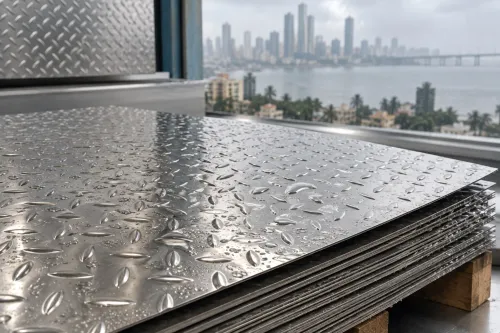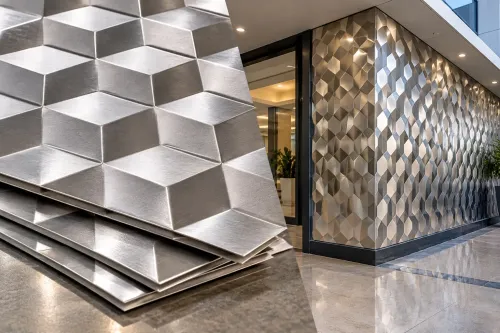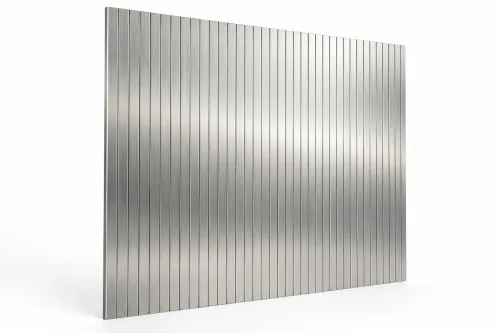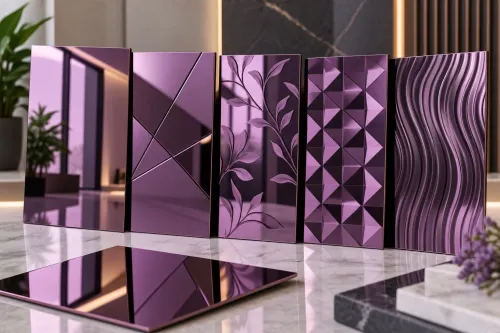
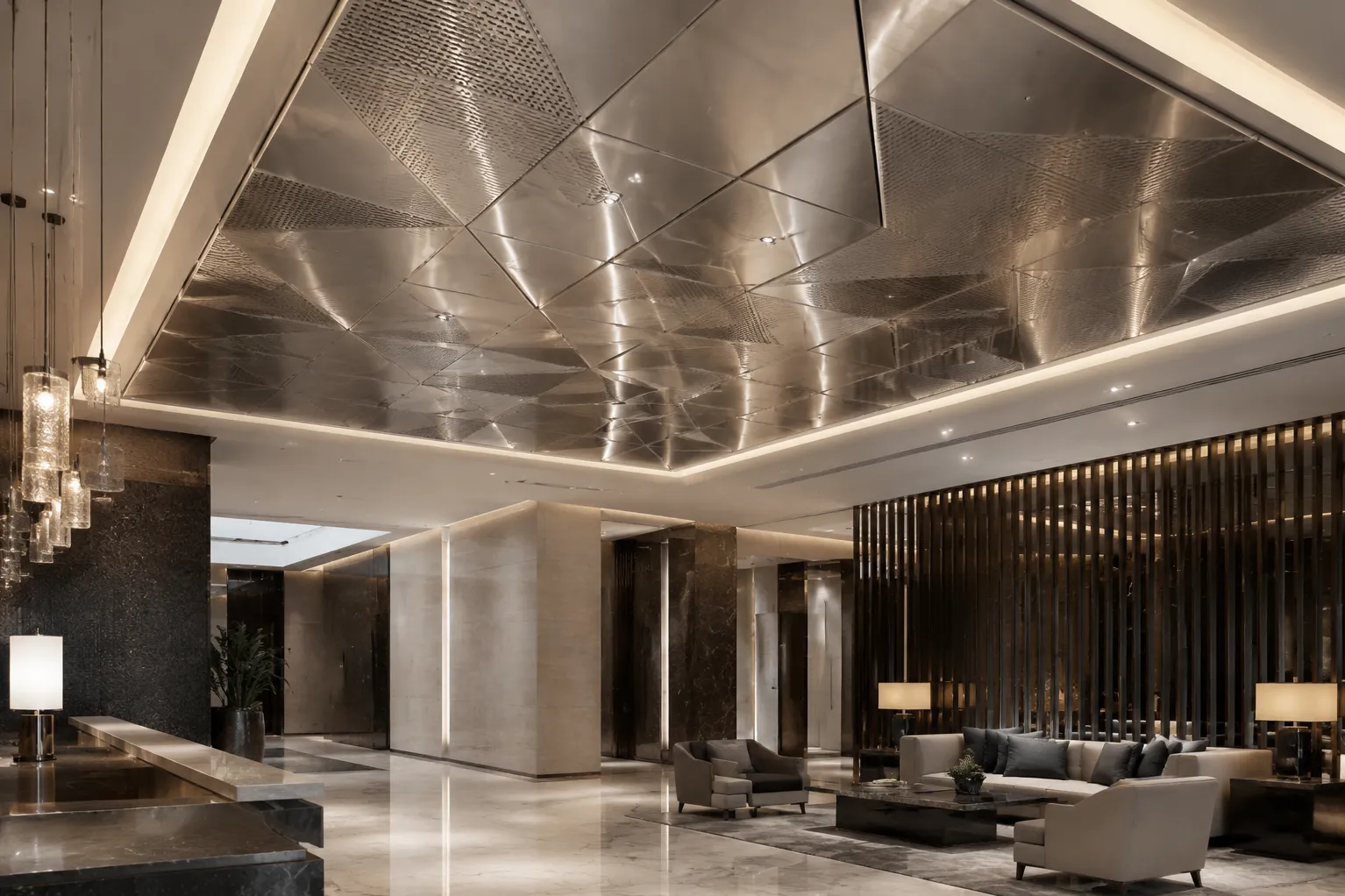
Ceilings are increasingly being treated as architectural surfaces rather than simply functional elements. Metallic finishes can introduce contrast, reflection, texture, and visual continuity across a space. SS Designer Sheets for Ceiling Applications can be particularly useful when an architect wants a ceiling that becomes part of the interior design language.
Unlike wall panels, ceiling materials have additional considerations because they are viewed from multiple angles and must work with lighting, support systems, ventilation, access panels, and building services.
Why Use Stainless Steel on a Ceiling?
Stainless steel provides a clean architectural appearance and can be finished in several ways.
A ceiling may incorporate:
- Brushed stainless steel
- Hairline finishes
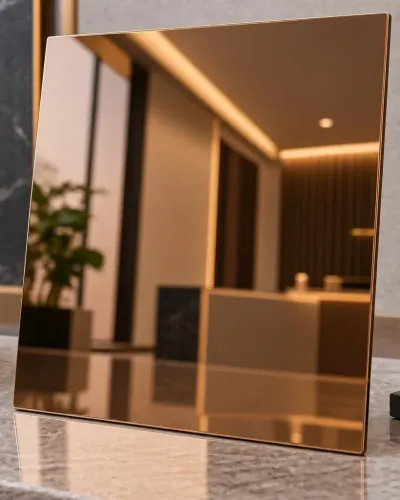
- Mirror surfaces
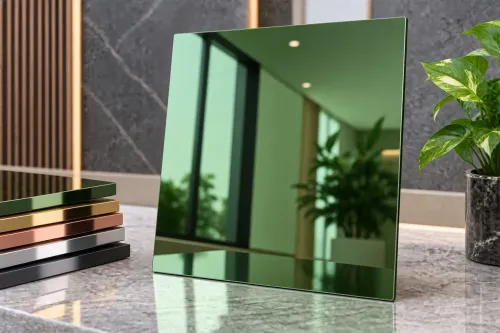
- Coloured PVD
- Patterned sheets
- Perforated or decorative elements where appropriate
The choice depends on the project's visual and functional requirements.
Lighting Is a Major Design Factor
Ceiling surfaces interact directly with artificial lighting. A highly reflective sheet can amplify light sources, while a brushed finish creates a more controlled visual effect.
Architects should assess:
- Downlights
- Linear lighting
- Spotlights
- Cove lighting
- Natural daylight
- Reflections from surrounding glass
A finish that looks understated at eye level can appear dramatically different when installed overhead.
Coordinate With Building Services
Ceiling design rarely exists independently. HVAC systems, sprinklers, electrical fixtures, speakers, smoke detectors, access panels, and lighting all need to be accommodated.
The sheet layout should therefore be coordinated with the services plan before fabrication.
Poor coordination can lead to unnecessary cutting and visible irregularities.
Where Can Designer Stainless Steel Ceilings Work?
Stainless steel ceiling elements can be considered for:
- Hotel lobbies
- Restaurants
- Retail stores
- Corporate reception areas
- Luxury residential entrances
- Showrooms
- Commercial corridors
- Feature zones within large interiors
Using stainless steel selectively can create a visual transition between different areas without requiring an entire ceiling to be metallic.
Choosing Between PVD and Standard Finishes
Standard brushed or hairline stainless steel can provide a neutral metallic appearance.
PVD-coated sheets introduce colour and can help coordinate the ceiling with other decorative surfaces.
For example, a champagne PVD ceiling feature may complement warm architectural finishes, while black PVD can create contrast in a contemporary interior.
The decision should consider the complete material palette rather than the ceiling alone.
Fabrication and Installation Considerations
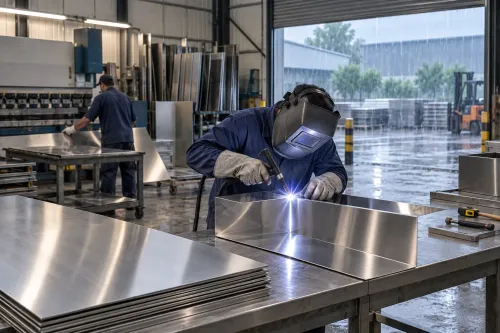
Ceiling panels need accurate dimensions and reliable fixing arrangements. Sheet thickness, panel size, support spacing, edge treatment, and access requirements should be established early.
For Mumbai projects, procurement teams should also account for transportation, site access, installation sequencing, and coordination with other contractors.
NIXON STEELIUM LLP supports stainless steel sheet and PVD coating requirements for architectural projects where decorative metal surfaces form part of the design concept.
Before Finalising the Material
A ceiling specification should answer several practical questions:
- What finish is required?
- What colour is required?
- What sheet grade and thickness are appropriate?
- How will panels be supported?
- Where will joints appear?
- How will lights and services be integrated?
- How will the surface be cleaned?
- Has the actual sample been reviewed?
A well-designed stainless steel ceiling is not simply about selecting an attractive sheet. It requires coordination between aesthetics, fabrication, lighting, engineering, and installation.
Keywords