Manufacturing interiors need to withstand cleaning, traffic, handling and industrial dust without looking purely utilitarian. By the end, you will know where rose gold mirror steel earns its place, where another finish is safer, and which material, fabrication and installation details to put into the specification.
Key takeaways
- Use rose gold mirror steel to separate visitor areas from production zones.
- Select panels by exposure to traffic, moisture, chemicals, and cleaning.
- Specify PVD colour, substrate grade, thickness, finish, edges, and protection.
- Protect the mirror face during cutting, handling, installation, and maintenance.
Why the finish suits public-facing factory spaces
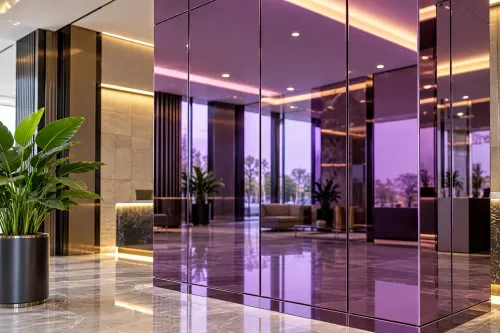
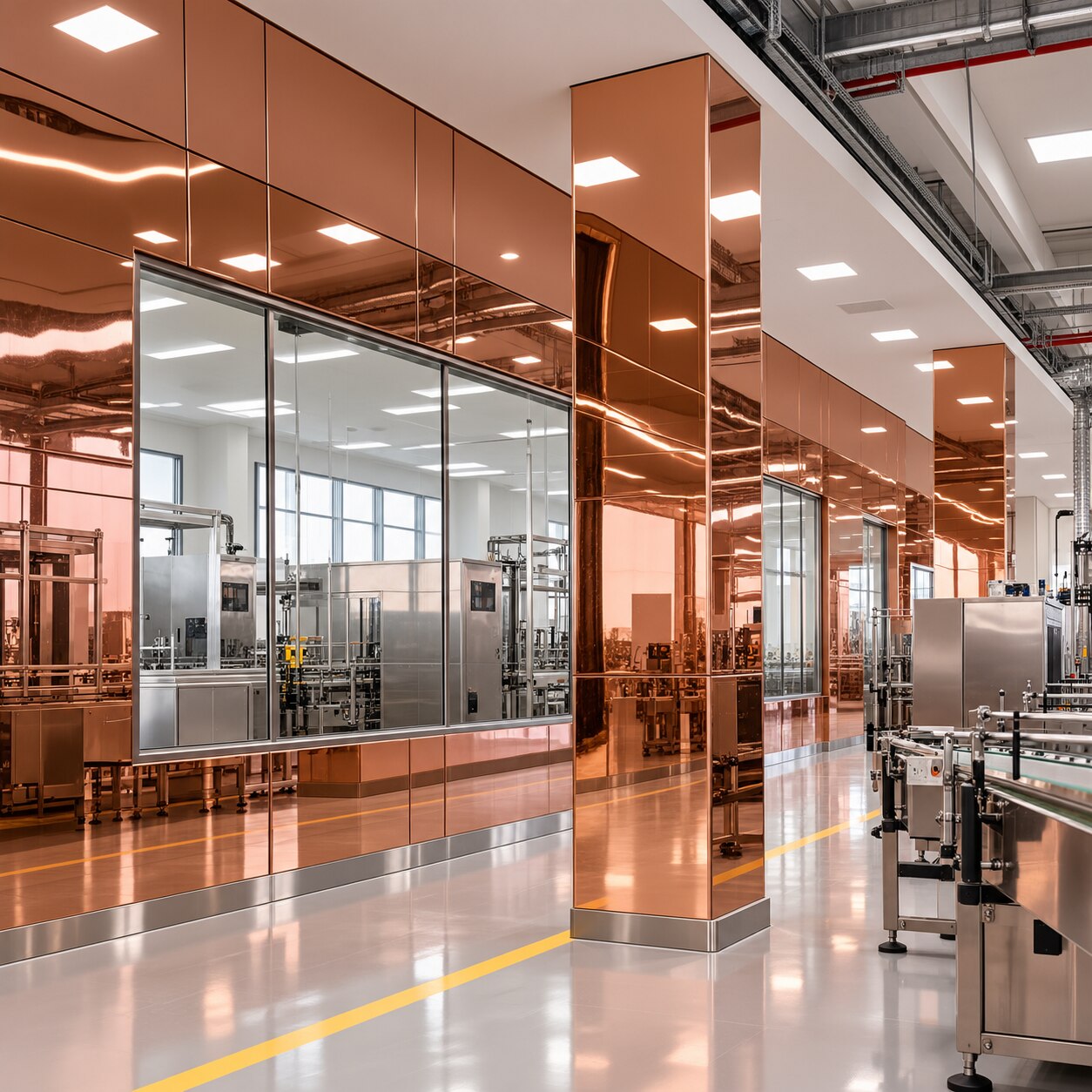
Rose gold mirror stainless steel benefits for manufacturing interiors begin with clear visual zoning. The warm metallic colour separates visitor routes, reception areas and branded wayfinding from production equipment, while the mirror surface makes compact spaces feel brighter and more finished.
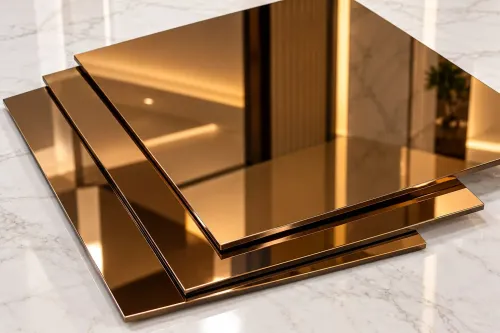
Unlike paint, the colour is integrated through a PVD coating over stainless steel, so the panel keeps a durable, corrosion-resistant substrate and a smooth surface that is straightforward to clean.
Rose gold mirror steel benefits are strongest in protected, public-facing locations such as:
- Reception desks and visitor entrances
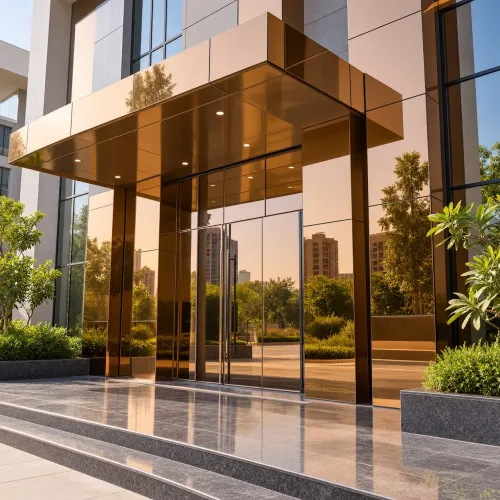
- Lift surrounds and lobby walls
- Control-room feature walls
- Office partitions and columns
- Canteen fronts and showroom areas
- Machine-room screening and equipment enclosures
The finish also tolerates ordinary interior impact better than glass or laminate, and stainless steel provides long service life without swelling, peeling or absorbing moisture. That makes it useful where appearance matters but the space still experiences trolley traffic, routine cleaning and frequent inspections.
Mirror is not automatically the best choice everywhere. Its reflections can distract operators around high-bay lights, inspection points or vehicle routes, while fingerprints, oil haze and water marks show more clearly than on a satin surface.
Avoid direct product-contact or contamination-critical areas unless the coating, cleaning chemicals and hygiene procedure have been validated; choose a less reflective finish for abrasive zones, welding sparks, grinding dust and severe washdown.
Match the panel to the factory zone
Use rose gold mirror steel in controlled, visible zones rather than across the whole plant. It suits reception desks, visitor routes, lift surrounds, office partitions, canteen fronts and branded wayfinding, where its warm reflection supports presentation and cleaning access is manageable.
| Zone | Preferred finish or material | Reason |
|---|---|---|
| Reception, showroom and visitor route | Rose gold mirror stainless steel | Creates a focal surface away from abrasive traffic and process dust. |
| Control-room feature wall or office partition | Rose gold mirror, used selectively | Works behind people, signage or furniture; check reflections from screens and high-bay lighting. |
| Production corridor, machine-room screening or column | Satin stainless steel | Hides fingerprints, minor scratches and dulling better than a continuous mirror. |
| Washdown area or food-handling zone | Satin stainless steel, with sealed joints | Reduces glare and exposes fewer visual defects; specify hygiene-compatible joints and cleaners. |
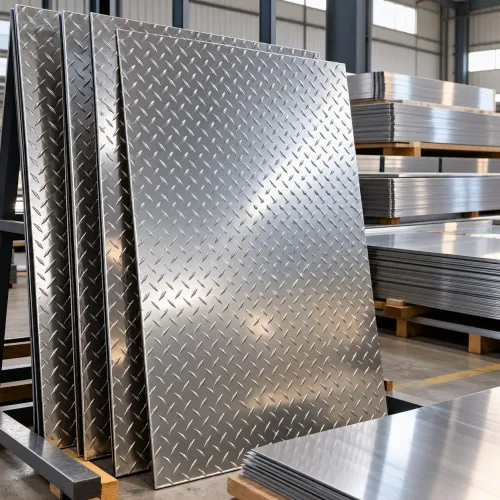
| Forklift route, loading area or grinding zone | Embossed stainless, painted steel or impact-rated wall protection | Mirror faces show abrasion, dents and grinding dust immediately. |
| Welding bay or high-heat location | Non-decorative, heat-suitable construction | Sparks and heat can damage the coating, backing or adhesive. |
For rose gold stainless steel for factories, check a full-size sample under installed lighting and viewing angles. A mirror beside inspection lamps can distract operators, while satin or patterned decorative stainless sheets for manufacturing offer safer visual control.
Do not call a panel fire-rated because its exposed sheet is stainless. Confirm the fire classification of the complete assembly, including its core, adhesive, backing and fixings. Detail returns, trims and sealed penetrations so cut edges and drilled holes do not collect water, chlorides or cleaning chemicals.
What PVD changes—and what a mirror surface reveals
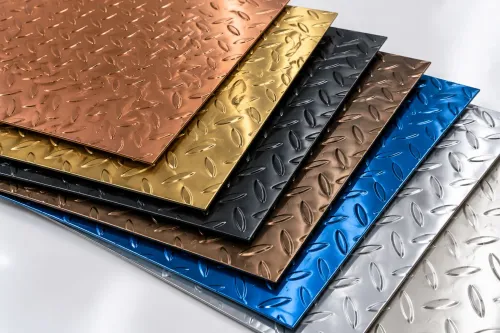
A rose-gold colour does not mean the sheet is a copper-gold alloy. In rose gold PVD stainless panels, a thin physical vapour deposition coating supplies the colour while the stainless substrate provides most of the stiffness, corrosion resistance and fire behaviour.
The mirror polish reflects light—and exposes fingerprints, oil haze, water spots, scratches and polishing-direction changes.
| Option | Compared with rose-gold PVD mirror stainless | Practical consequence |
|---|---|---|
| Painted mild steel | Organic film over a lower-cost substrate | Easier colour changes, but chips and corrosion at damage can spread |
| Powder coating | Thicker baked polymer coating | Hides minor substrate marks better, but can scratch, chalk or burn |
| Plating | Deposited metal layer, often over another base metal | Appearance depends heavily on base preparation and damaged areas |
| Glass | Hard, reflective, non-metallic facing | Offers transparency but can break, chip and reveal fingerprints |
| Laminate | Decorative printed or resin-impregnated surface | More design freedom, but edges and impact damage are vulnerable |
| Aluminium composite panel | Lightweight aluminium skins around a core | Easier handling, but not equivalent to stainless impact or fire performance |
| Brushed or satin stainless | Same metal with directional, low-glare texture | Better at disguising handling marks and reflections |
| Embossed stainless | Patterned surface that scatters light | Hides minor damage more effectively, but is harder to wipe completely clean |
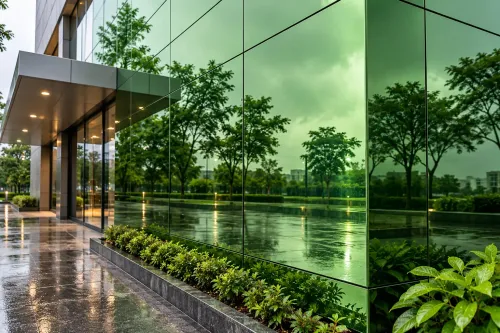
The rose gold mirror steel benefits are strongest on protected feature walls, lift surrounds and reception zones where cleanability and visual warmth matter. Avoid continuous mirror surfaces beside high-bay lights, welding, vehicle routes or inspection stations; reflected glare can distract operators. A sample viewed under installed lighting reveals problems that a diffuse workshop inspection misses.
Choose the substrate and fabricate it without damaging the face
304 suits dry, conditioned interiors; choose 316 or 316L where chloride-bearing washdown, coastal air or chemical exposure can reach the panel. For rose gold stainless steel for factories, grade selection matters more than the colour: PVD does not repair a weak substrate choice or contaminated weld zone.
| Grade | Choose it when | Main warning |
|---|---|---|
| 304 | Reception areas, offices and normal interior routes | Chlorides and aggressive cleaners can stain exposed edges |
| 316/316L | Washdown zones, coastal sites or chemical exposure | It still needs protected edges and sound detailing |
Fabricate rose gold pvd stainless panels in an approved sequence:
- Keep the protective film on the face during cutting, drilling, folding and installation; abrasive pads, swarf and dragging tools can score the mirror.
- Cut and drill with clean, dedicated tooling, then deburr immediately. Do not leave sharp holes or bright, uncoated cut edges exposed.
- Trial tight radii, deep folds and punched patterns before production. Forming after PVD can crack or delaminate the coating; forming first avoids that risk.
- Detail returns, trims and sealed joints so water, chlorides and cleaning chemicals cannot stand against bare substrate.
- Use compatible stainless fixings, isolated from galvanically dissimilar metals, and countersink or space them consistently to prevent distortion.
- Install panels after grinding, welding and dusty work finish. Remove film promptly, then clean with a soft cloth and a non-abrasive, approved cleaner.
Write a specification that survives approval and service
Approve a physical sample before you approve the colour. The rose gold mirror stainless steel benefits for manufacturing interiors depend on how the surface looks under installed lighting, not only under a showroom lamp.
- Request a signed sample showing stainless grade, thickness, mirror finish designation, PVD colour reference, allowable colour variation, sheet direction and protective-film specification. Check it beside production lights, high-bay fittings and the intended viewing angles; glare can distract operators near inspection stations or vehicle routes.
- Specify the forming sequence: cut, drill, fold and deburr from the reverse side where possible, then protect the face until installation. Define a brushed or polished edge, corner radius, joint width, backing, core, adhesive and concealed-fixing method.
- State cleaning limits: pH-neutral detergent, clean water and a soft microfiber cloth only. Ban chloride bleach, hydrochloric acid, abrasive powder, steel wool and scouring pads; remove oil and fingerprints promptly, then rinse and dry to prevent streaks.
- Require adhesion testing to ASTM D3359, abrasion testing and corrosion exposure to ASTM B117 against an agreed coating-manufacturer protocol. Record test duration, rating and limits: neither ASTM test predicts every factory-interior condition.
- Approve the complete assembly’s fire classification when it includes a core, adhesive, backing or insulation. Stainless sheet alone is not a fire rating.
Check whether NIXON STEELIUM LLP can issue this sample, test record and assembly drawing before production, rather than accepting a catalogue colour for decorative stainless sheets for manufacturing.
| Sample or approval point | Confirm in writing | Reject if |
|---|---|---|
| Colour | Reference, tolerance and lighting check | Visible mismatch between panels |
| Assembly | Core, adhesive, fixings and fire evidence | “Fire-rated” claim covers sheet only |
| Service | Cleaner list and repair method | Supplier permits abrasive cleaning |
Related product
 | PVD Coated Mirror Stainless Steel Sheets . Specification Product Name Stainless Steel Products Steel Type Stainless Steel Steel Product Type Steel Plates Grade 304 Thickness 0.3-3.0... View product → |
Frequently asked questions
Why does rose gold mirror steel suit public-facing factory spaces?
Its warm metallic colour creates visual zoning for reception areas, visitor routes, and branded wayfinding, while the mirror surface increases the sense of brightness and finish.
How should you match rose gold panels to a factory zone?
Choose the panel according to each zone’s traffic, moisture, chemical exposure, cleaning routine, and risk of impact rather than using one finish everywhere.
What does PVD change, and what does a mirror surface reveal?
PVD creates the rose gold colour on the stainless steel surface. The mirror finish reflects light and surroundings but also makes fingerprints, scratches, dents, and uneven substrates easier to see.
How do you specify and fabricate rose gold mirror stainless panels safely?
State the PVD colour, stainless steel substrate, sheet thickness, mirror finish, dimensions, edge treatment, fabrication tolerances, protective film, and inspection requirements; use fabrication methods that prevent damage to the visible face.
Keywords