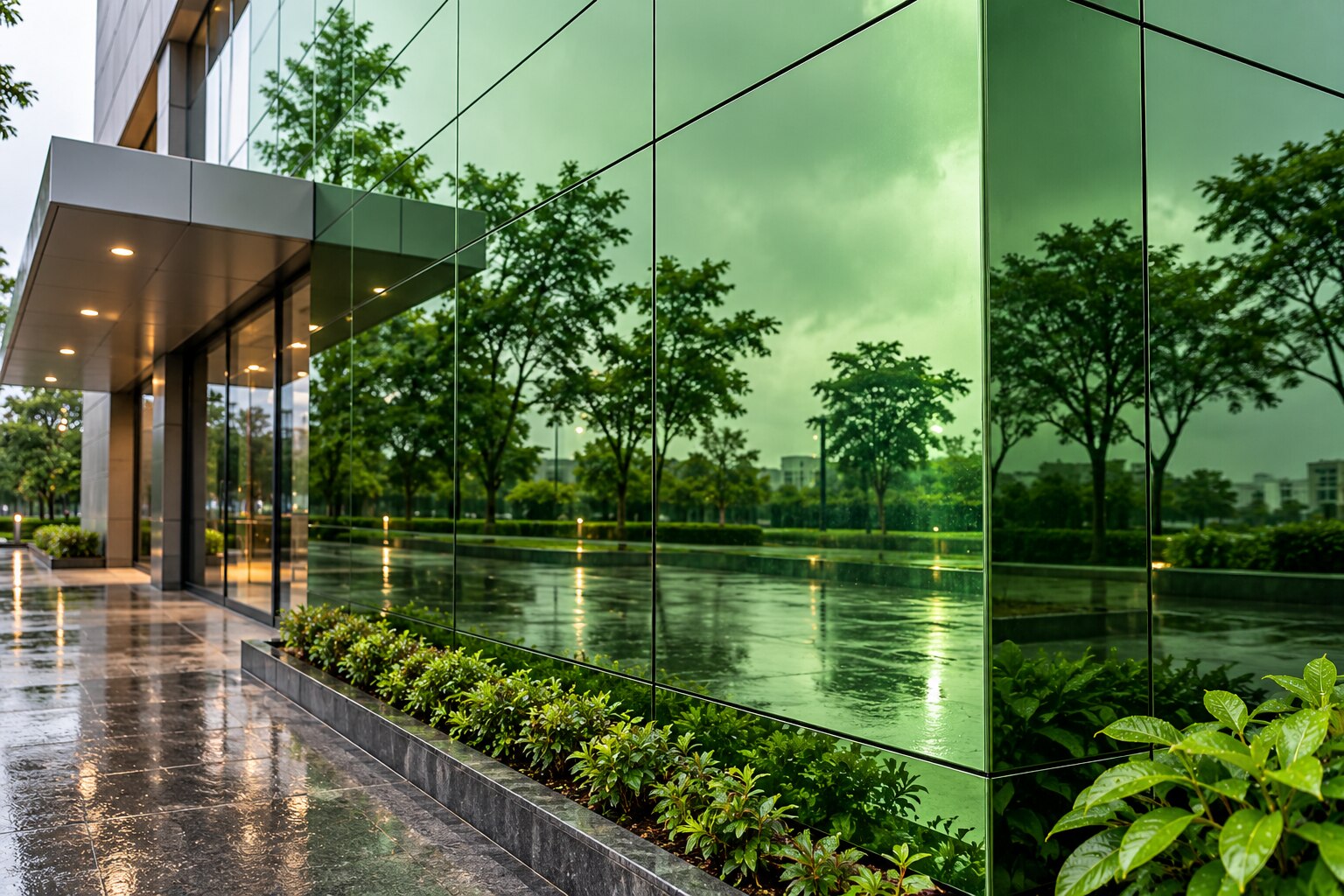
Mumbai’s monsoon exposes exterior metal to repeated wetting, drying, wind-driven rain, chloride deposits, pollution and difficult cleaning conditions. By the end, you will be able to specify the stainless grade, coating evidence, fabrication controls, drainage details, fixing system and maintenance plan needed to decide whether a green mirror façade is suitable for your project.
Key takeaways
- Use 316 or 316L near salt, chloride deposits and poorly washed façades.
- Design drained, ventilated rainscreens with sealed joints and isolated fixings.
- Protect PVD faces with film, clean tools and controlled fabrication processes.
- Approve samples, drawings, grade, finish and maintenance access before ordering.
Is green mirror stainless suitable for Mumbai’s coastal monsoon exposure?
Grade 304 is adequate only on well-drained, regularly washed elevations away from direct coastal salt. Compare 304L where welding is extensive, and 316/316L for sites near the sea, chloride deposits, sheltered recesses, traffic pollution or poor cleaning access; molybdenum improves pitting resistance, but does not make 316 immune.
Salt-bearing dirt trapped on 304 can cause tea staining or pitting.
A PVD colour layer does not replace the substrate’s corrosion resistance. Scratches, drilled edges and cut-outs expose stainless steel, so request the grade, coating chemistry, nominal thickness, adhesion, abrasion and corrosion-test evidence.
For a green mirror stainless steel exterior in Mumbai, approve the choice against these conditions:
- Check exposure severity, façade orientation, ledges, drainage, cleaning access and the consequence of visible staining.
- Specify sloped sills, drip edges and ventilated or sealed joints that do not trap chloride-bearing water.
- Reject mirror where heavy abrasion, uncontrolled public contact, strong solar reflection, constant construction dust or infrequent cleaning is unavoidable.
| Option | Glare and impact | Weight, movement and upkeep |
|---|---|---|
| Painted aluminium | Lower glare; dents and repairs show | Light, higher thermal movement; repainting |
| Powder-coated metal | Moderate glare; chips expose metal | Light; touch-up colour matching is difficult |
| Glass | High glare; brittle impact risk | Heavy; frequent cleaning and drainage detailing |
| ACP | Low weight; dents and delamination risk | Easy handling; joints and replacement matter |
| Natural stone | Low glare; impact can chip | Heavy; staining and sealed joints demand care |
| Ordinary polished stainless | Strong glare; durable impact surface | Heavy; similar drainage and cleaning effort |
| Green mirror stainless | Strong glare; scratches remain visible | Durable substrate; disciplined cleaning is essential |
How should the rainscreen, joints and fixings manage Mumbai wind and rain?
Direct every wet path outward. Rain trapped behind a folded return, ledge or recessed joint carries chloride-bearing dirt into crevices, where staining and corrosion continue after the surface dries.
1. Build a ventilated cavity behind the rainscreen, with continuous inlet and outlet paths, drained flashings, sloped sills and drip edges. Give every horizontal fold a fall and a visible weep route; never close a pocket that cannot drain or dry.
2. Choose one joint strategy and detail it consistently. An open joint needs a drained, ventilated cavity, baffles where wind-driven rain demands them, and insect protection. A sealed joint needs compatible backer material, correctly sized sealant, clean bonding faces and movement capacity. Confirm sealant compatibility with the PVD system, stainless substrate and adjacent membranes.
3. Do not approve green mirror PVD sheets for monsoon use by sheet thickness alone. Engineer each rainscreen, column cladding, parapet, soffit or formed cassette for panel dimensions, span, wind pressure, suction, allowable deflection, support lines and subframe capacity.
Require project-specific shop drawings showing panel size, fastener spacing, joint width, folds, sills, drip edges and weep paths.
4. Use compatible stainless fasteners, with 316 fasteners considered for chloride exposure, and verify the complete assembly. Isolate stainless from aluminium, carbon steel, zinc-coated parts and copper with suitable washers or membranes; keep interfaces dry and drained, and prevent water-trapping contact or crevices.
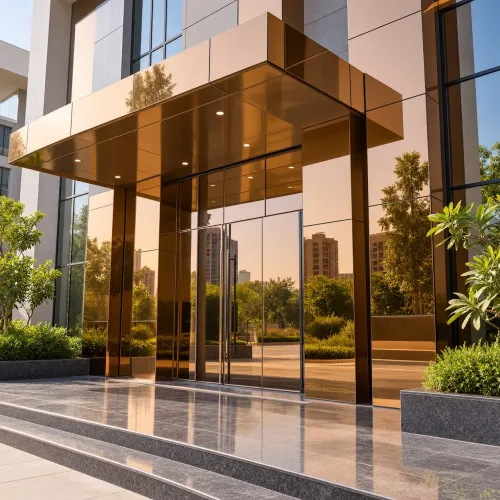
Before approval, review mirror reflection toward roads, neighbouring buildings, occupied rooms and pedestrian areas.
What fabrication and handling controls protect the green PVD surface?
Keep the mirror face protected from the first lift to final installation. This sequence is the minimum handling discipline for green mirror sheets for fabricators and green mirror pvd sheets for monsoon conditions.
1. Receive sheets vertically or on the manufacturer’s specified orientation, with padded separators between faces. Lift with clean suction equipment or protected gloves; never slide sheets face-to-face, across concrete, or against unprotected racks.
2. Leave the manufacturer-approved film on during transport and most fabrication. Remove it after fabrication and before prolonged outdoor storage, direct UV exposure, or heat exposure; otherwise the adhesive can embrittle and leave residue. Follow the specified removal and cleaning method.
3. Before production, approve trial pieces for shearing, laser cutting, punching, drilling, minimum bend radius, edge finishing, and every proposed welding operation. Require formed samples showing the actual green finish at bends, holes, folded edges, joints, and cut-outs.
4. Fabricate in a clean area after carbon-steel work, using dedicated stainless tools. Keep abrasive dust, cement slurry, metal swarf, dirty gloves, and unprotected tools away from the face.
5. Tight bends can crack the colour layer; cutting can expose the substrate; welding and other heat can discolour the finish beside cuts or welds. Deburr from the exposed face outward without dragging swarf across it, and confirm permitted weld zones before work begins.
6. Seal or finish penetrations and cut edges so they cannot hold chloride deposits or stagnant water. Reject any edge treatment that traps slurry, swarf, or salt. Never use green mirror sheets for fabrication until the approved samples pass inspection.
How do you inspect, clean and maintain green mirror sheets during the monsoon?
Inspect every sheet before installation under neutral daylight and angled light. Compare each face with the physical control sample for colour and gloss; a digital colour code cannot control PVD variation. Approve no elevation until the batch matches.
- Check viewing-angle variation and polishing direction.
- Look for haze, orange peel, pinholes, scratches and fingerprints.
- Remove sheets with deposition marks, exposed edges or distortion.
- Record the batch number and keep matching sheets together; do not mix non-matching batches on one elevation.
Clean green PVD sheets for humid weather with clean fresh water, a pH-neutral detergent and soft lint-free cloths or non-abrasive pads. Rinse thoroughly and dry the face before water deposits dry; dried chloride-bearing dirt can leave staining. Never use hydrochloric acid, chloride bleach, abrasive powder, wire brushes, steel wool or contaminated tools.
Schedule a full wash before handover and inspect again after the first heavy monsoon period. Wash sheltered, traffic-facing or coastal elevations more frequently because rain does not reliably clean horizontal ledges, folded returns or recessed joints. Check those areas for trapped dirt, bird droppings and water marks.
Ask the warranty issuer whether exterior coverage includes fading, discolouration, delamination, staining and loss of gloss. Record its exposure limits, required cleaning frequency, approved products, inspection duties and exclusions before ordering. Keep these records with the approved sample and batch register.
What should the supplier, architect and installer approve before ordering?
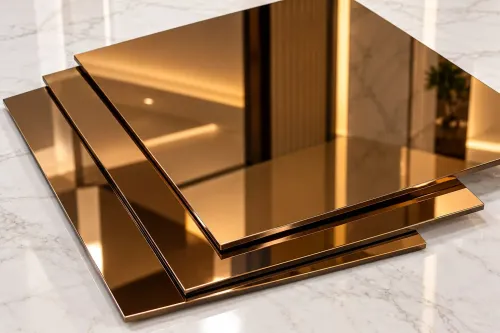
Approve the evidence, appearance and installation details together before releasing an order for green mirror stainless steel sheets for monsoon exterior projects in Mumbai. A catalogue image or “PVD-coated” description is not enough.
1. Record site exposure: distance from the coast, chloride deposits, façade orientation, traffic pollution, sheltered recesses, drainage and cleaning access. Approve the stainless grade, comparing 304, 304L, 316 or 316L where salt, trapped dirt or visible staining creates greater risk.
2. Specify the base finish and polishing direction, not merely “mirror”. State the ASTM A480 finish reference, gloss and haze limits, acceptable distortion, orange peel and pinholes, and the permitted green colour variation by viewing angle and batch.
3. Obtain the mill test report naming the grade and heat or lot, a sheet-thickness report, PVD process documentation, coating chemistry or thickness range, batch number, adhesion and abrasion evidence, and corrosion testing under ASTM B117 or ISO 9227 with specimen preparation, scribe condition and failure rating.
Salt-spray hours compare specimens; they do not promise façade life.
4. Approve a physical colour sample and full-size mock-up before production. Define who accepts colour matching and mock-up appearance.
5. Approve panel dimensions, folded geometry, cut, drilled, bent and finished-edge samples, fixing spacing, isolation from dissimilar metals, sealants, drainage paths and weeps through installation drawings.
6. Assign responsibility for shop drawings, protective-film removal, access equipment, site cleaning, post-monsoon inspection and replacement-sheet availability. Replacement stock must match the approved batch and polishing direction.
NIXON STEELIUM LLP can support the material submittal and sample-review stage; the project team remains responsible for structural design, façade engineering and site-specific warranty acceptance.
Related products
 | PVD Coated Mirror Stainless Steel Sheets Specification Coating Type No additional coating (colored by vacuum deposition) Hardness 200 HB Corrosion Resistant Yes, high resistance to corrosion... View product → |
 | PVD Coated Mirror Stainless Steel Sheets PVD Coated Mirror Coloured Stainless Sheet Specification Steel Type Stainless Steel Steel Product Type Steel Sheets Grade 304 PVD Coated Mirror Coloured Stainless Sheet Trade Information... View product → |
Frequently asked questions
Is green mirror stainless suitable for Mumbai’s coastal monsoon exposure?
Yes, when the stainless grade, drainage, cleaning access and fixing system match the site. Grade 304 suits well-drained elevations away from direct coastal salt; choose 316 or 316L near the sea, in chloride-laden recesses, beside traffic pollution or where cleaning access is poor. Molybdenum improves pitting resistance but does not make 316 immune.
How should rainscreens, joints and fixings manage Mumbai wind and rain?
Use a drained and ventilated cavity, continuous flashings, open drainage paths and joints detailed to limit water entry. Engineer panel support and fixings for project wind loads, isolate dissimilar metals, and prevent trapped water at laps, corners and horizontal ledges.
What fabrication and handling controls protect the green PVD surface?
Keep the protective film on during cutting, forming and installation, use clean non-abrasive tools, separate stainless work from carbon-steel grinding, and remove swarf immediately. Approve bend radii, edge finishing, weld locations and sample panels before production.
How do you inspect, clean and maintain green mirror sheets during the monsoon?
Inspect after heavy rains for tea staining, salt deposits, blocked drains, damaged film, open joints and trapped water. Rinse with clean water, wash with a mild pH-neutral detergent and soft cloth, then dry without abrasive pads, chlorine bleach or hydrochloric acid.
What should the supplier, architect and installer approve before ordering?
Approve the stainless grade and thickness, green PVD finish sample, reflectivity expectations, panel sizes, tolerances, substrate and fixing details, joint layout, drainage, cleaning method, inspection standard and replacement-panel process in signed project documents.
Keywords